Client: A come Ambiente Museum, Politecnico di Torino
Role: UX Designer, Creative Director, Prototyper, Developer
Overview
This project was developed as my Master’s Degree Thesis. The goal was to design an interactive experience about the UN’s “Agenda 2030 for sustainable development” for the MAcA Museum, communicating the topic’s content and its data in an emotional and participatory way, with the aim to generate awareness and action in the user. I then developed a fully functional scaled prototype to test its properties and effectiveness for a scale implementation and to be shown to the stakeholders in order to get funds.
As a first step I did a user research of the museum audience and it’s tour model, to define the target and the project constraints, analyzing also today’s market and trends. To do so I benchmarked museum’s and branded experiences, gathering case studies, and conducing digital surveys and on site interviews.
The MAcA Museum represents a virtuous example first of all because it is the only museum in Europe linked entirely to environmental issues and also has an exhibition offer that is mainly interactive and with several examples of digital interactivity. This is a very important fact when compared to more prestigious Italian museums analyzed where, on the other hand, the digital interactive offer is very limited.
An interest in brief, highly interactive and informative experiences was highlighted.
The reference target was defined as a general target of families, with a minimum accessible target of 12 years old kids, for topic comprehension and digital accessibility. The experience has to be suitable for the average permanence of 5 minutes.

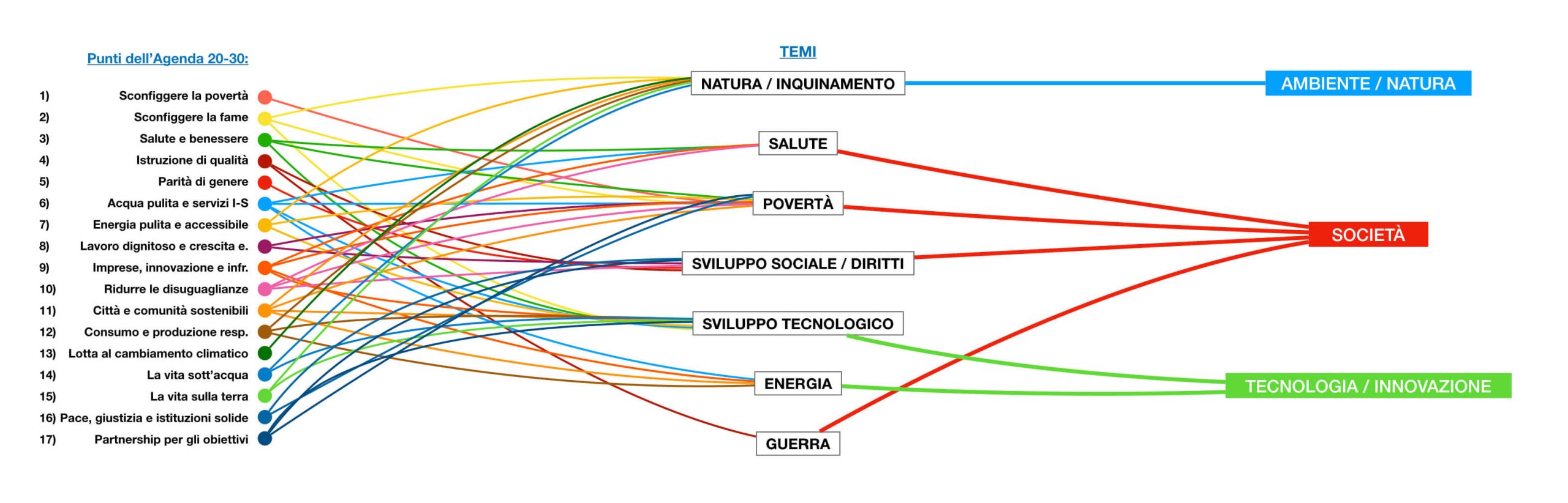
To achieve this aim I analyzed the agenda’s objectives and data, a list of 17 goals to be reached by 2030 signed by the UN countries, grouping them into increasingly related sub-categories. In fact, I found it central the need to talk about how these problems are related to each other.
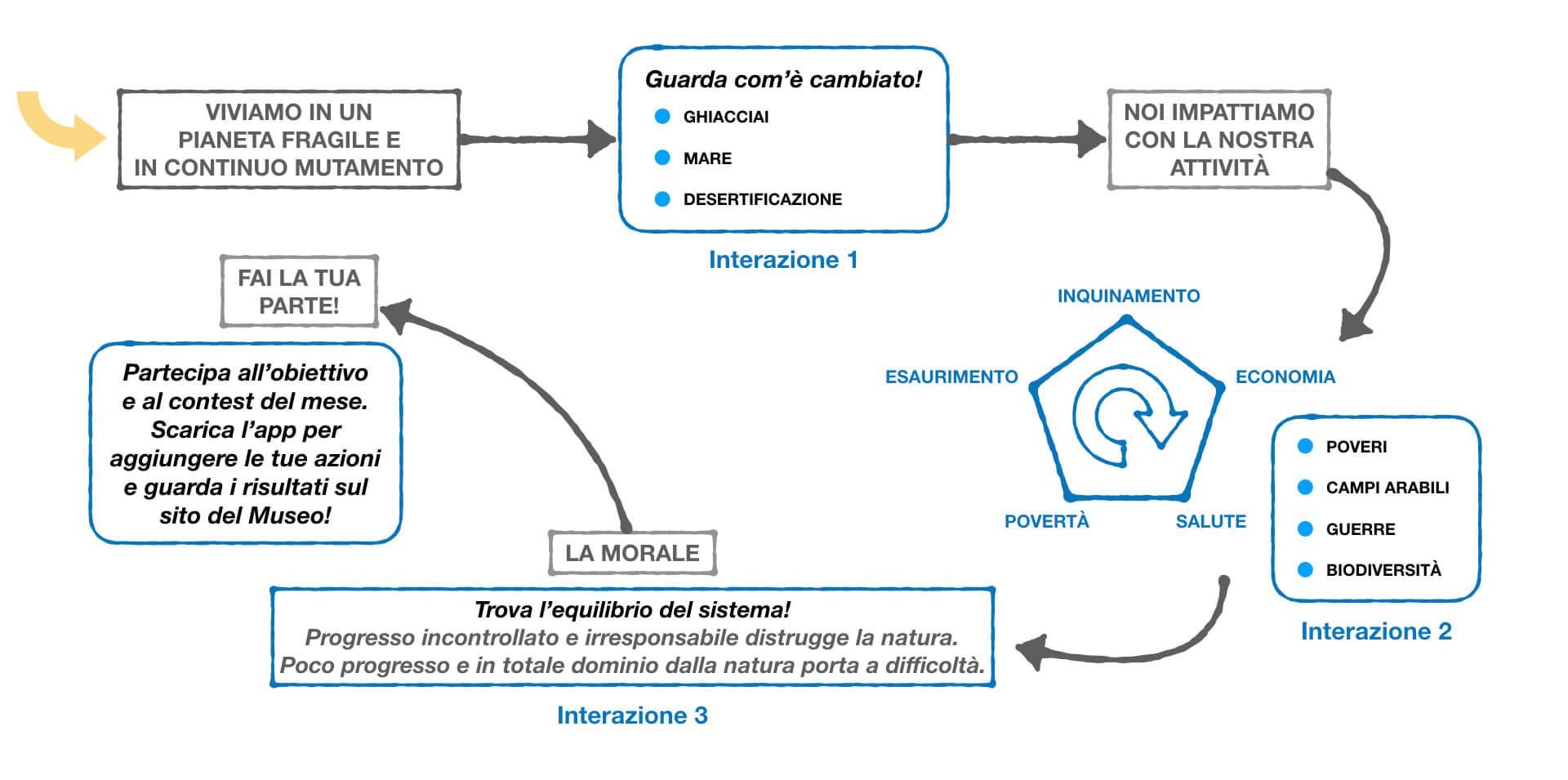
I then defined a narrative structure to be used as a plot to carry the user’s interaction. The goal is to create awareness of this issue, treating it simply and effectively, in order to encourage the user to dig into the subject individually and emotionally.
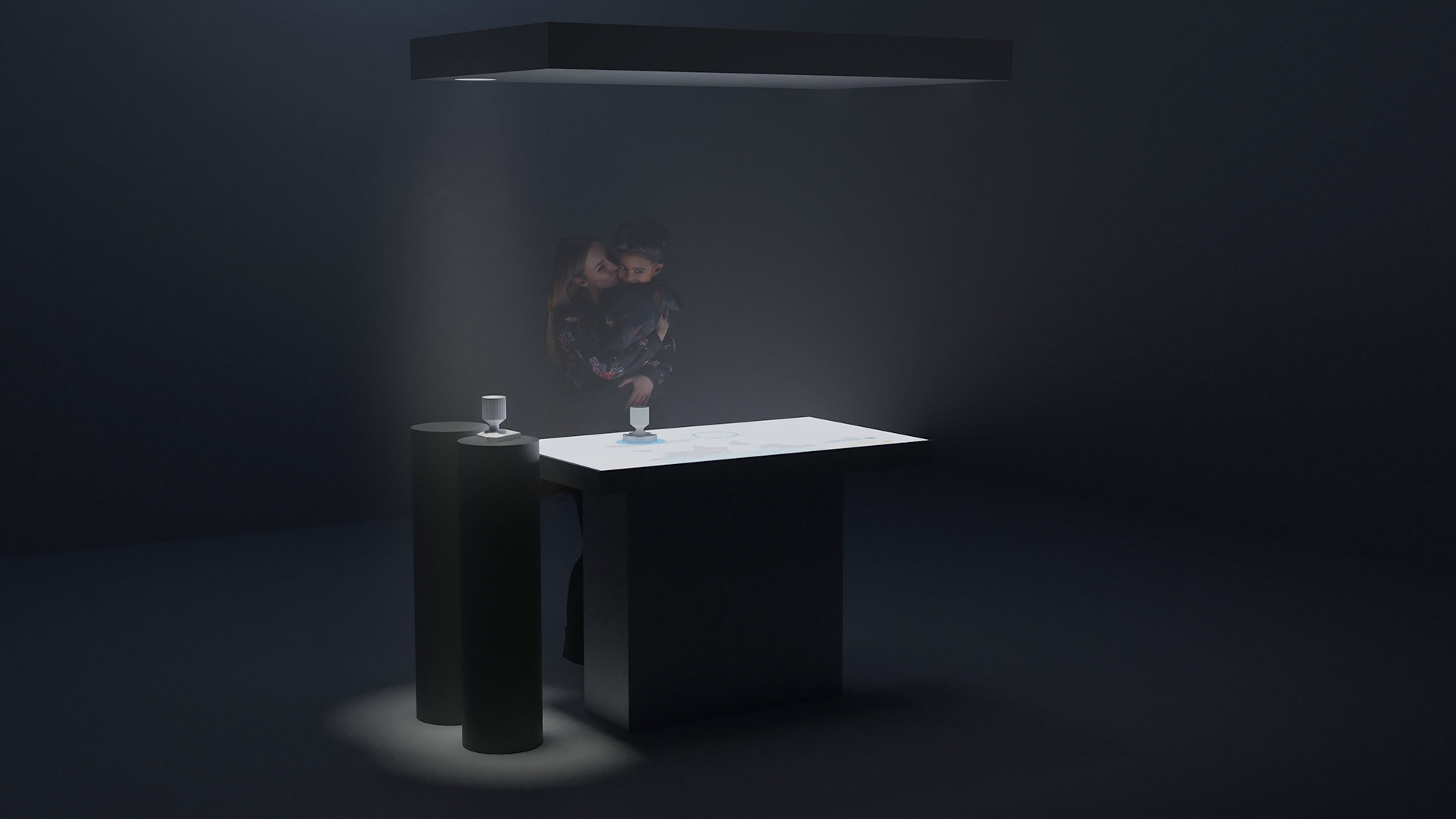
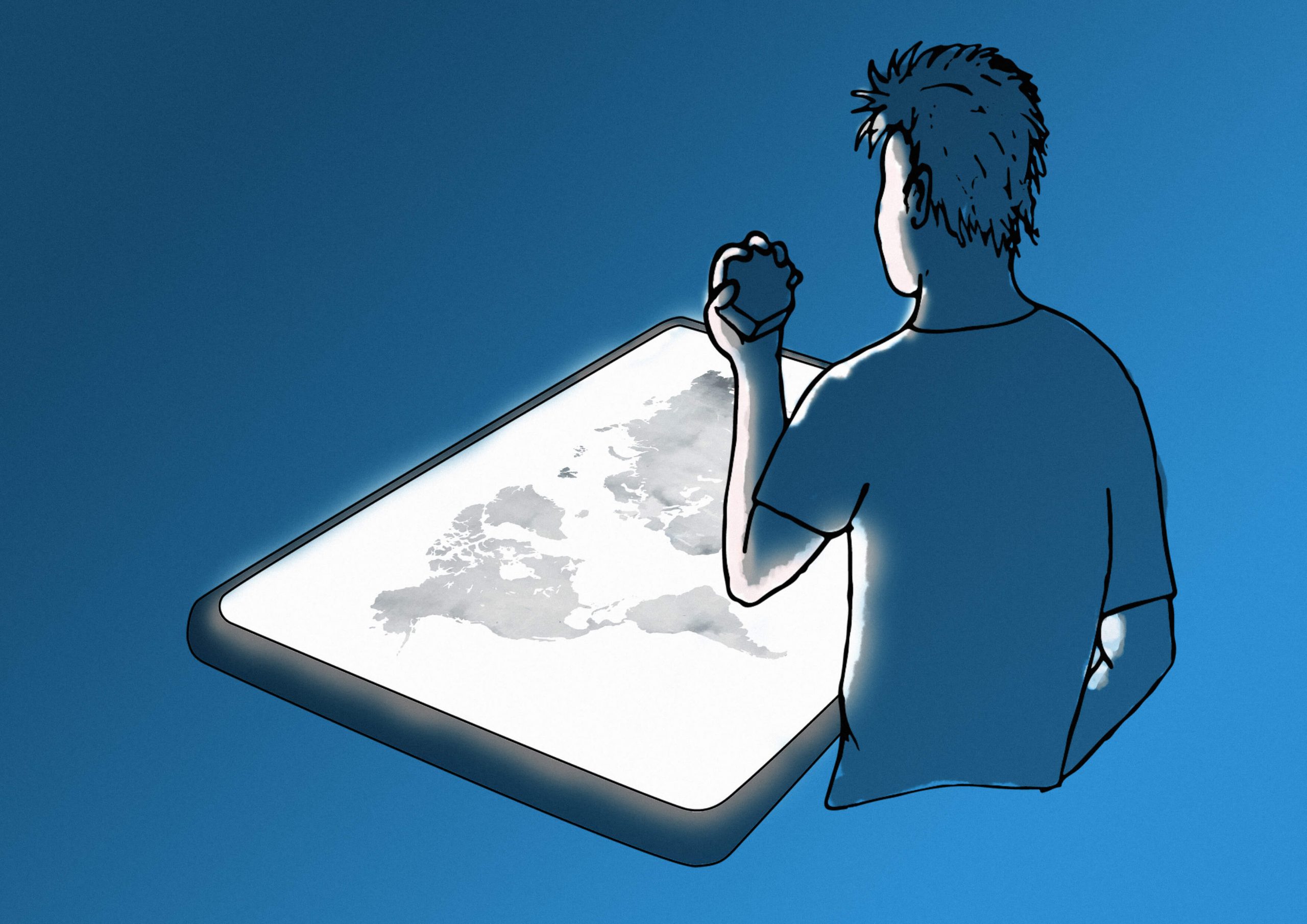
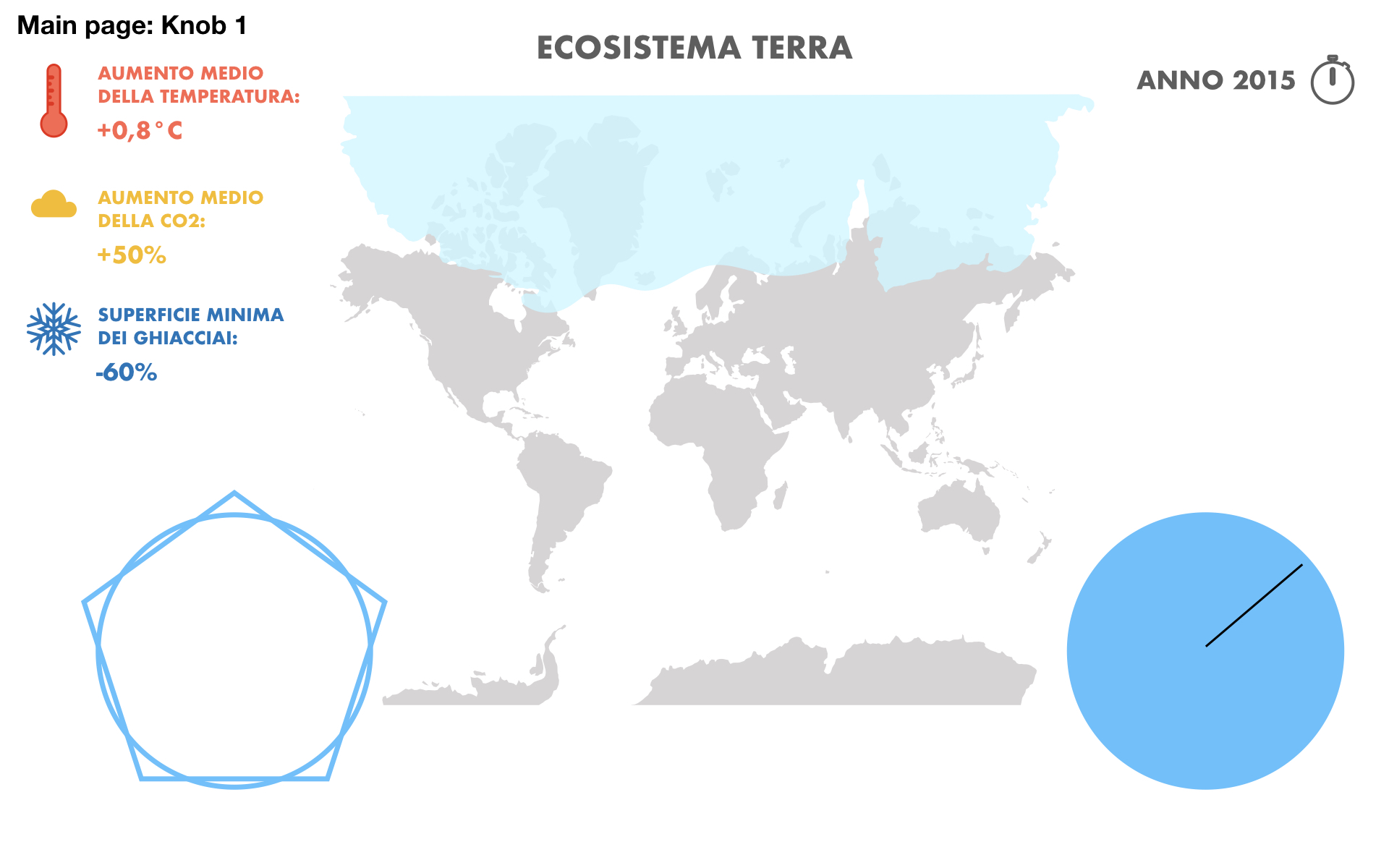
This process led to the definition of the main concept: a data visualization showing the connection between glaciers reduction, deforestation, biodiversity, poverty, conflicts and natural cataclysms, displayed on a touch screen.
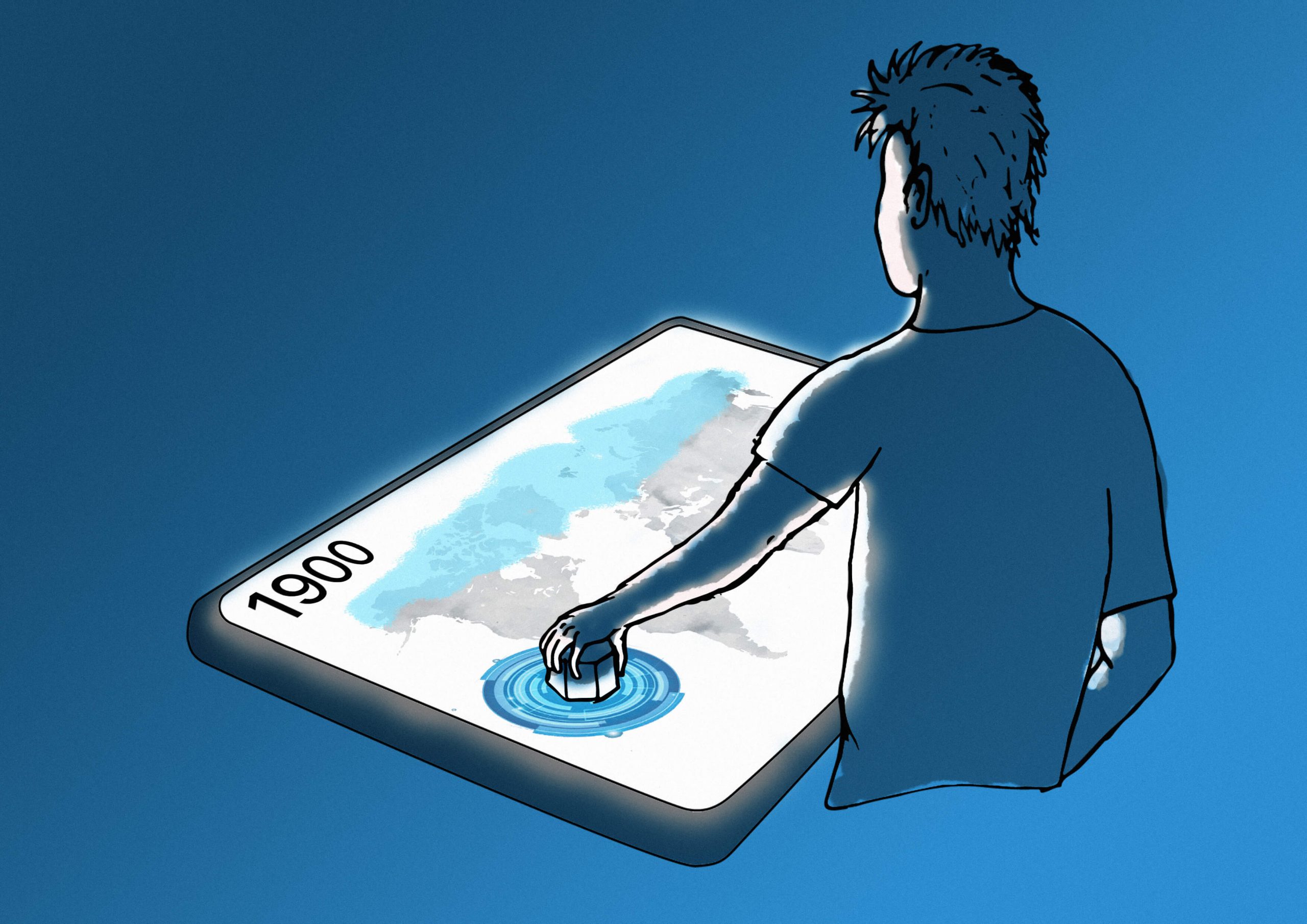
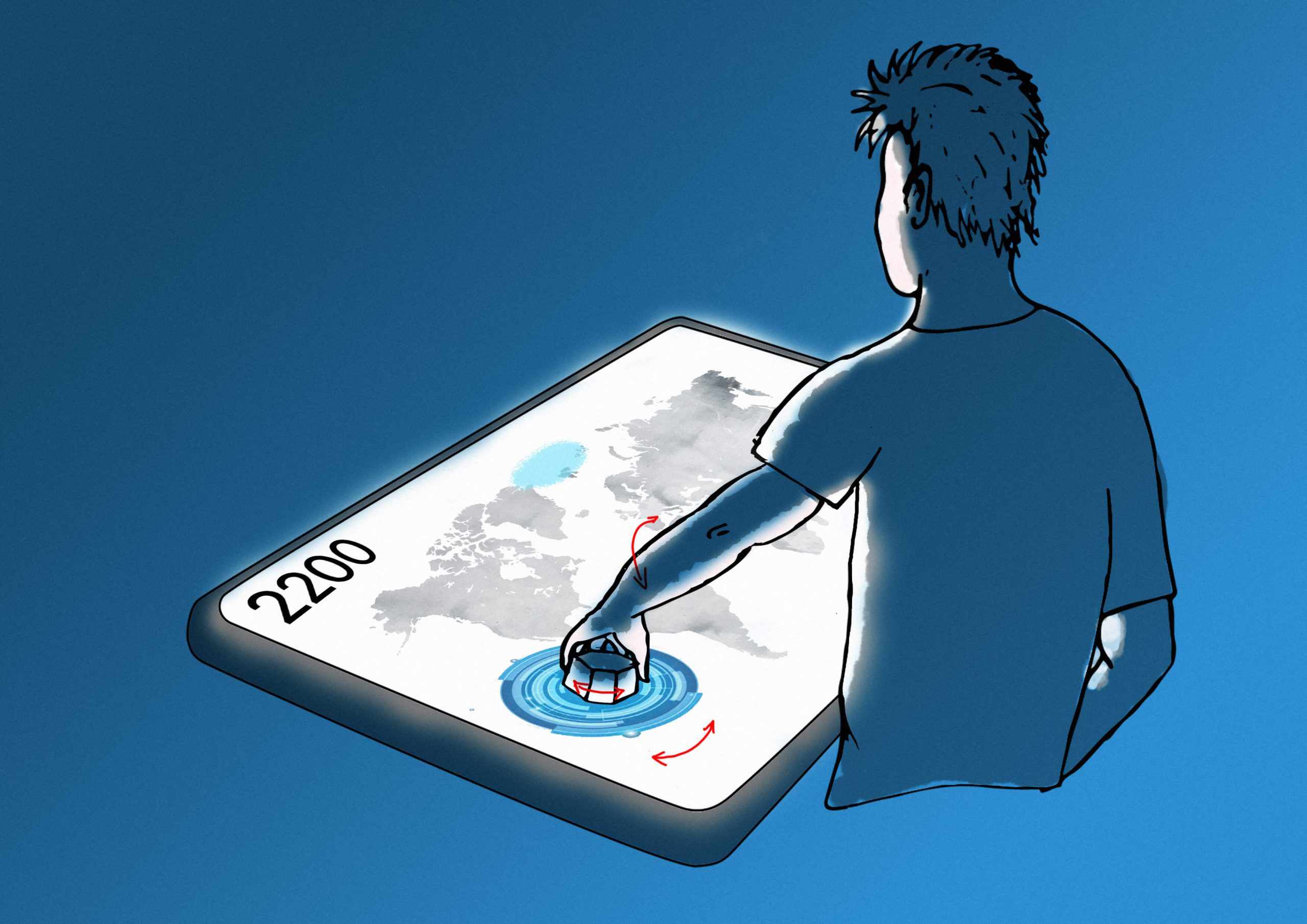
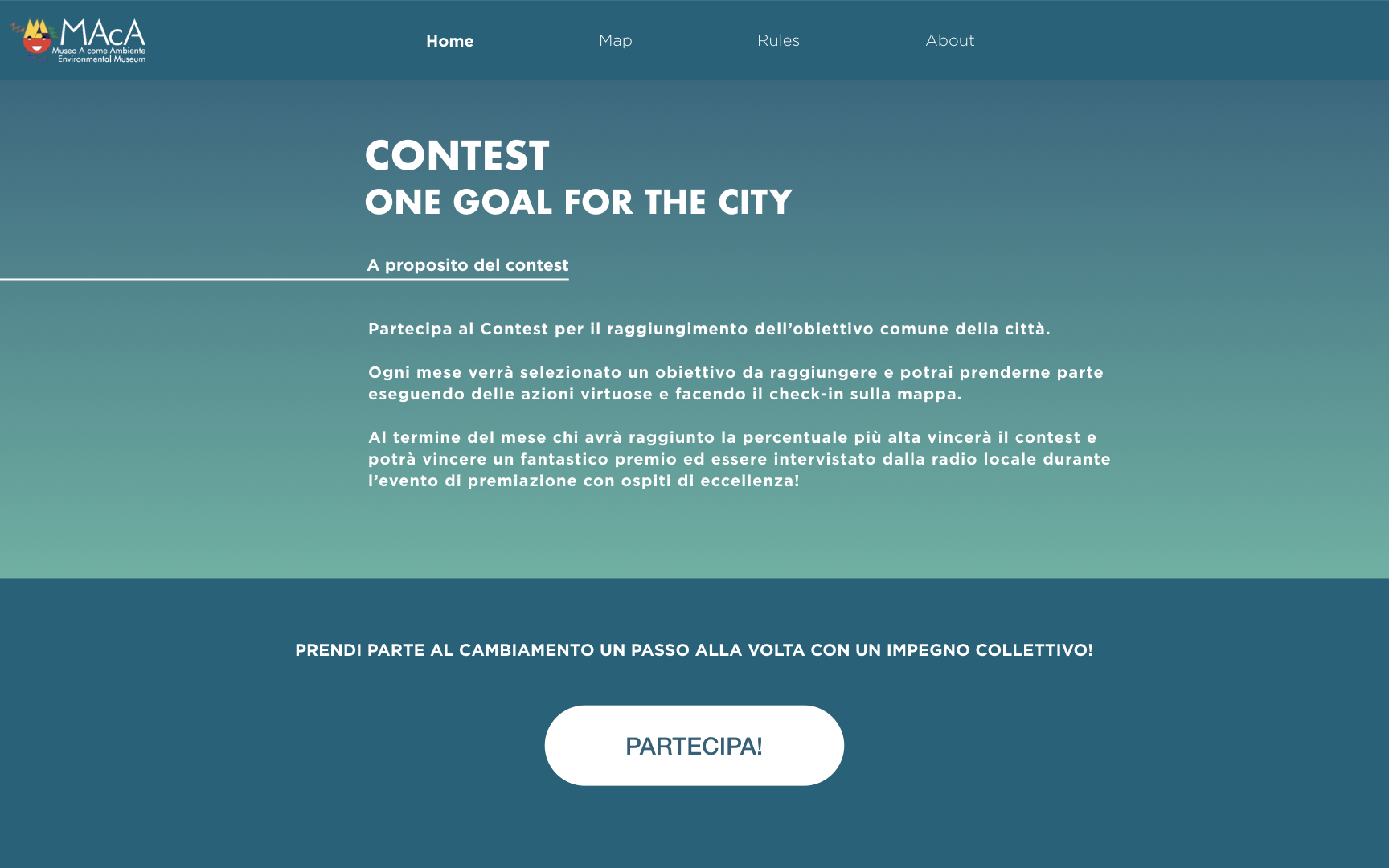
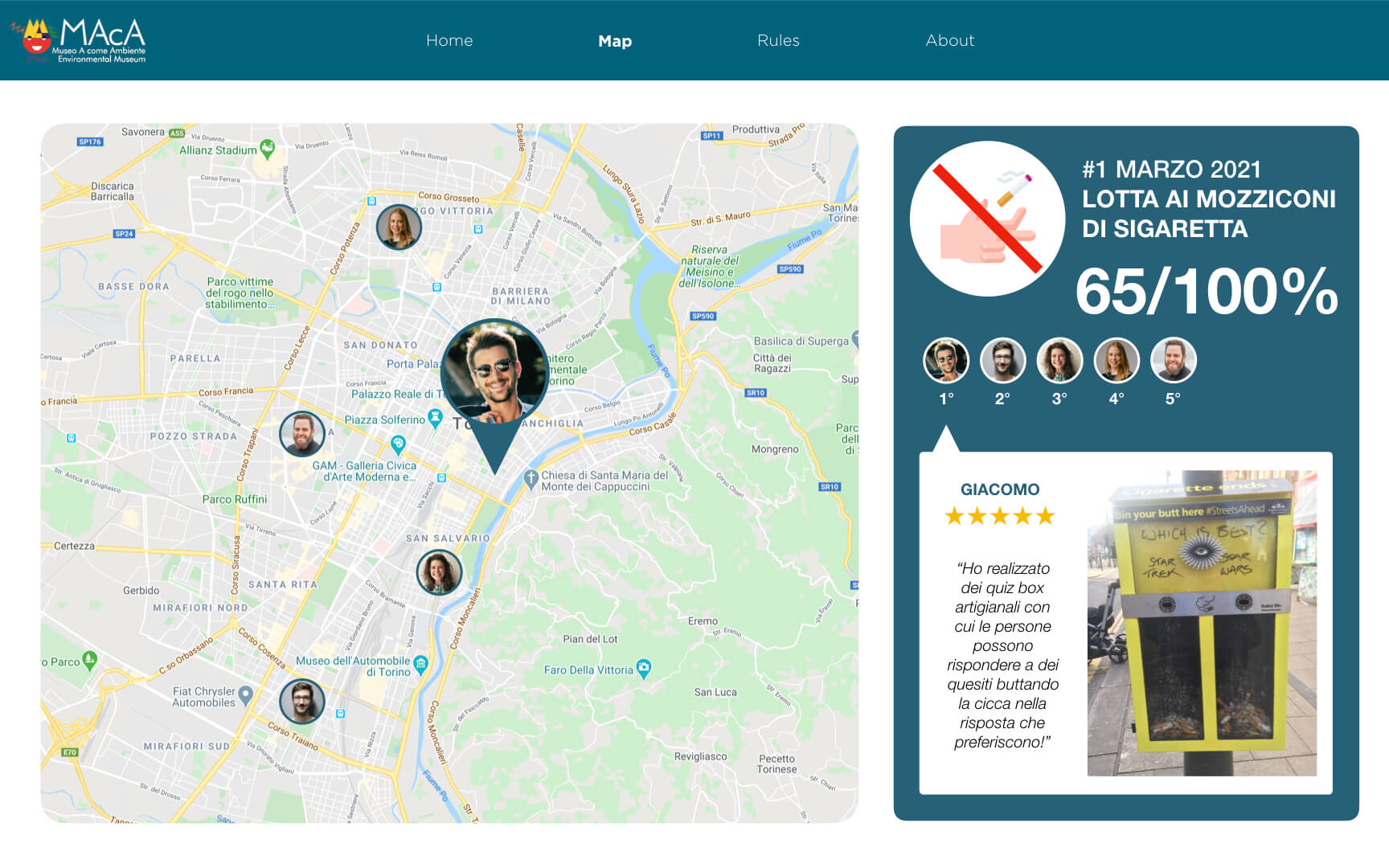
The user can interact with the screen and explore how this data evolves over time, observing how climate change impacts on a social level. At the end of the experience, a call to action to a contest for civic activation is made, set on a museum’s webpage I designed.
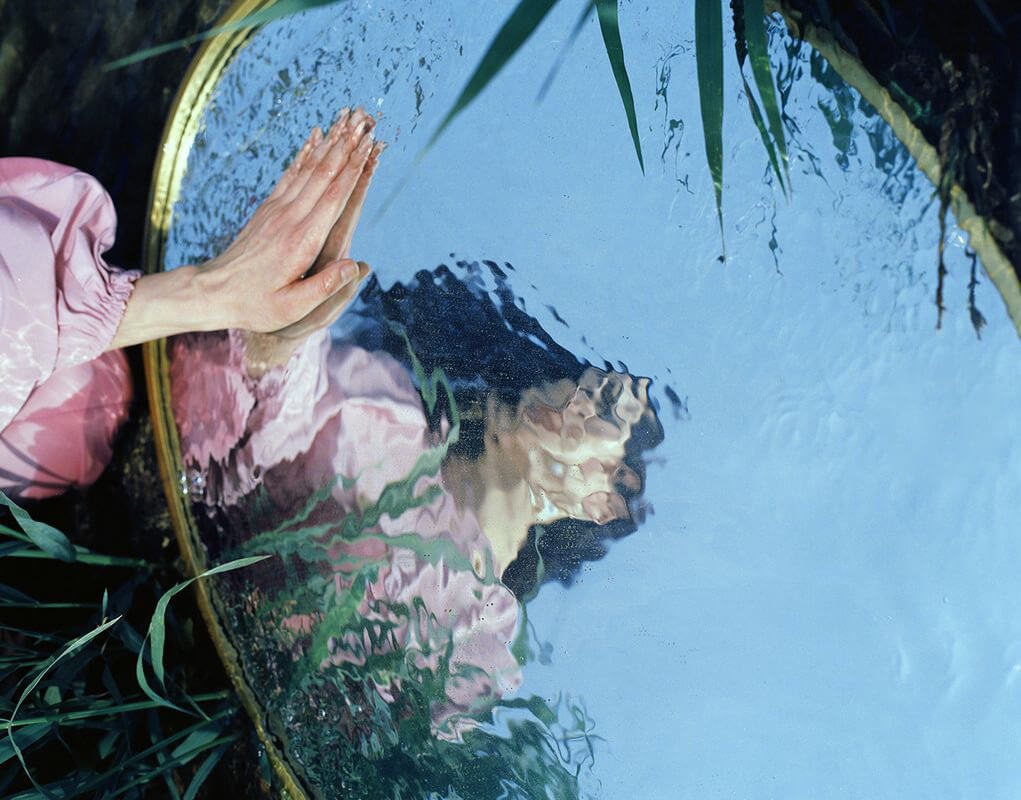
To immerse the user into the experience, I wanted to associate the installation with the idea and metaphor of a “mirror of water” into which the user can look to establish a point of contact with the planet and check its progress, as in a control panel. This is achieved by giving the word to “Mother Earth”, interpreted by a female voice that comes from the mirror and starts the experience through an introductory video storytelling, and then follows the user through the interactive path.
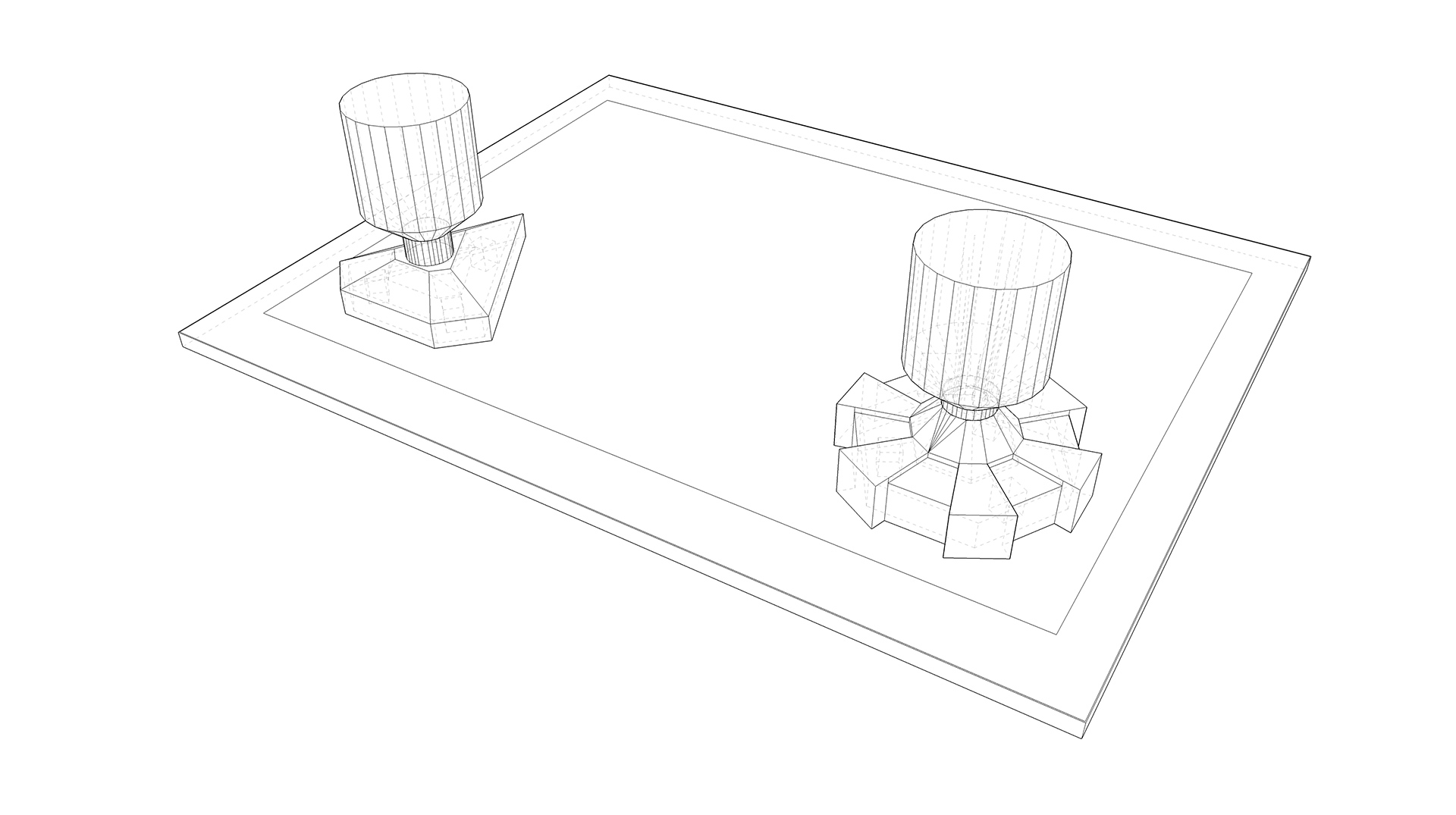
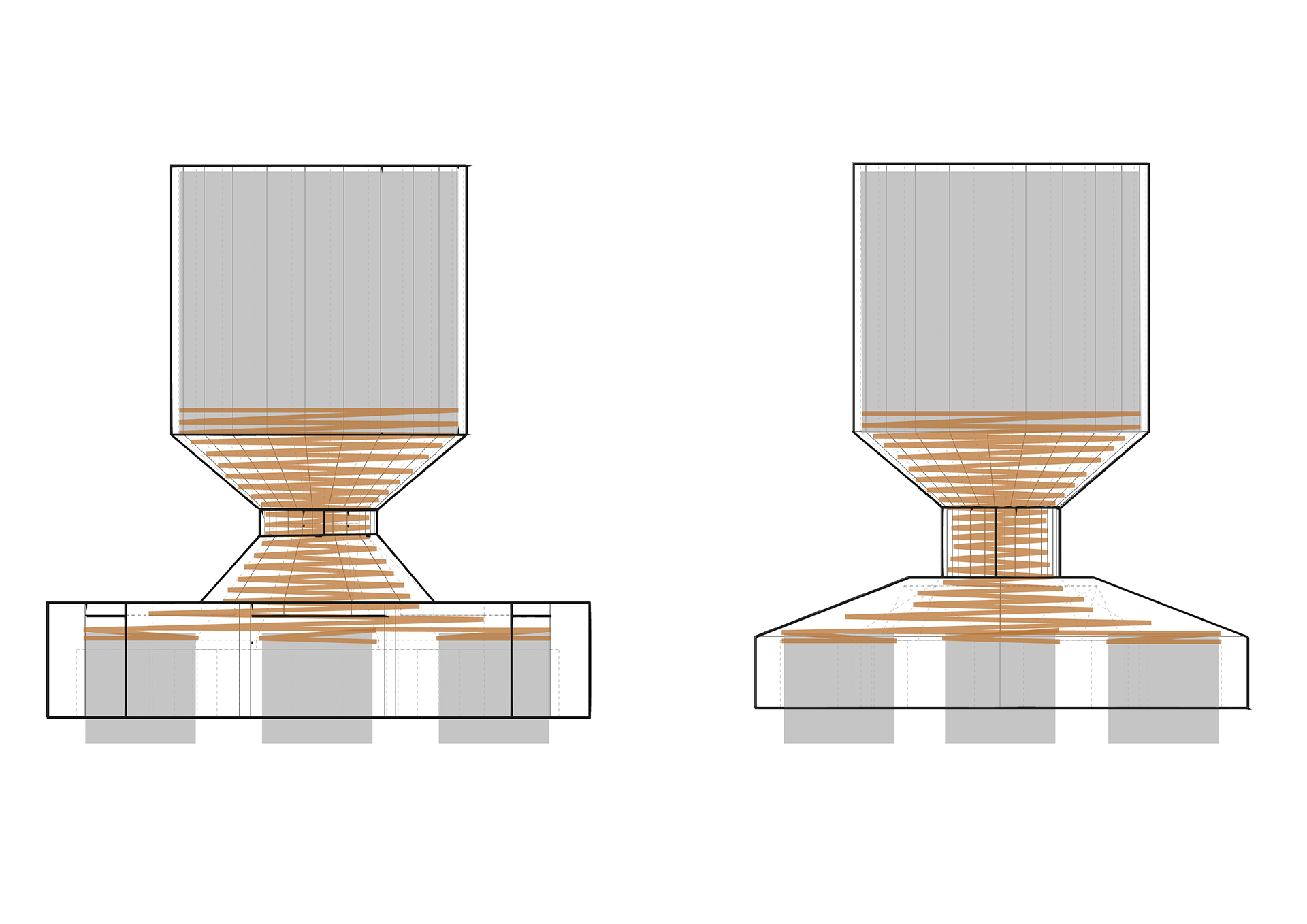
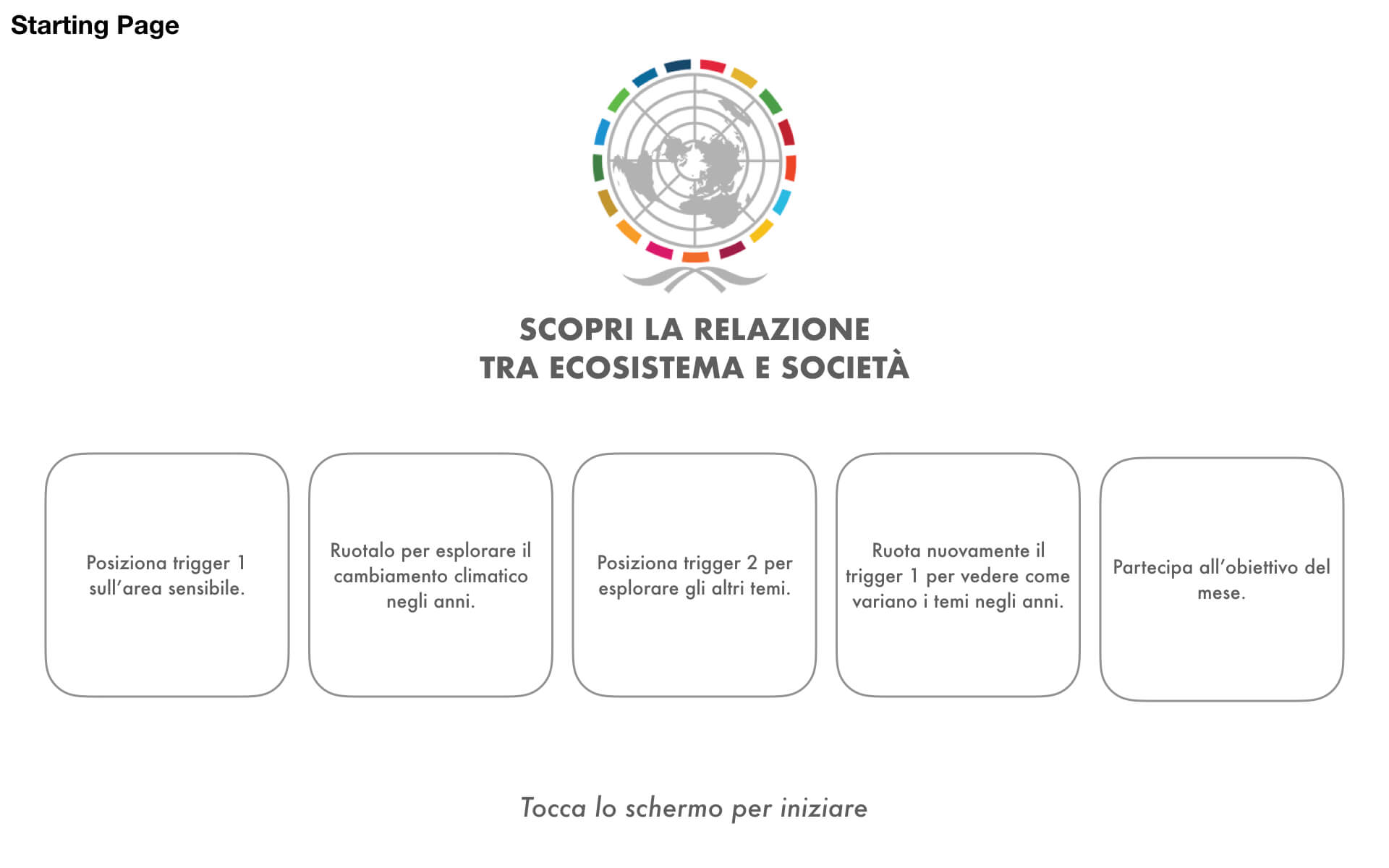
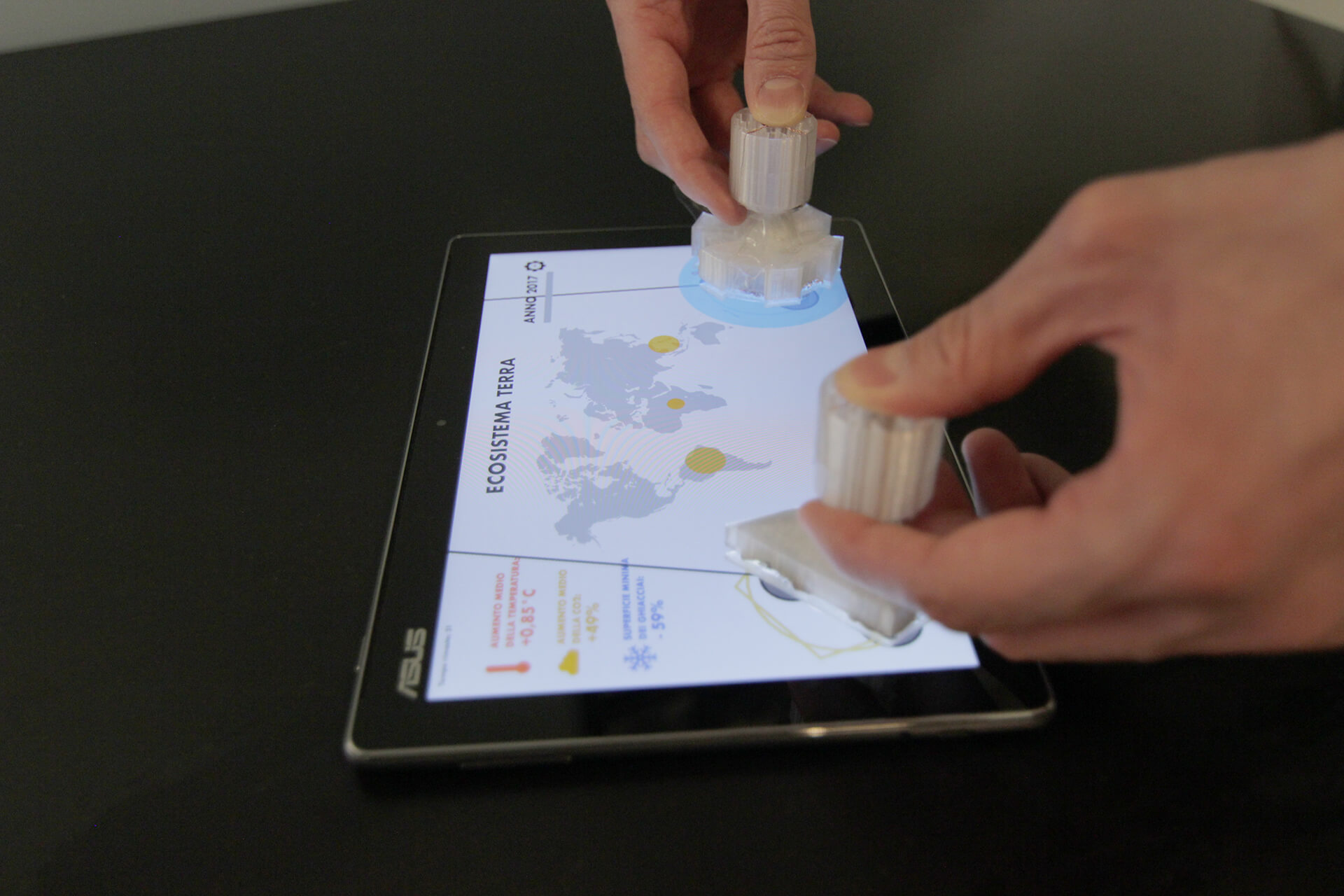
I worked the ideas up into storyboards, wireframes and flows. In order to make the interaction more engaging I designed a mixed analog-digital interaction system, that involves the use of two physical components to interact on the display surface, allowing the user to explore through a simulation engine.
I explored several wireframes that each differed in how they presented the data assessed with sketchy physical components to test their functionality on a small pool of 5 users and iterating on the design to distill the most intuitive features of each.
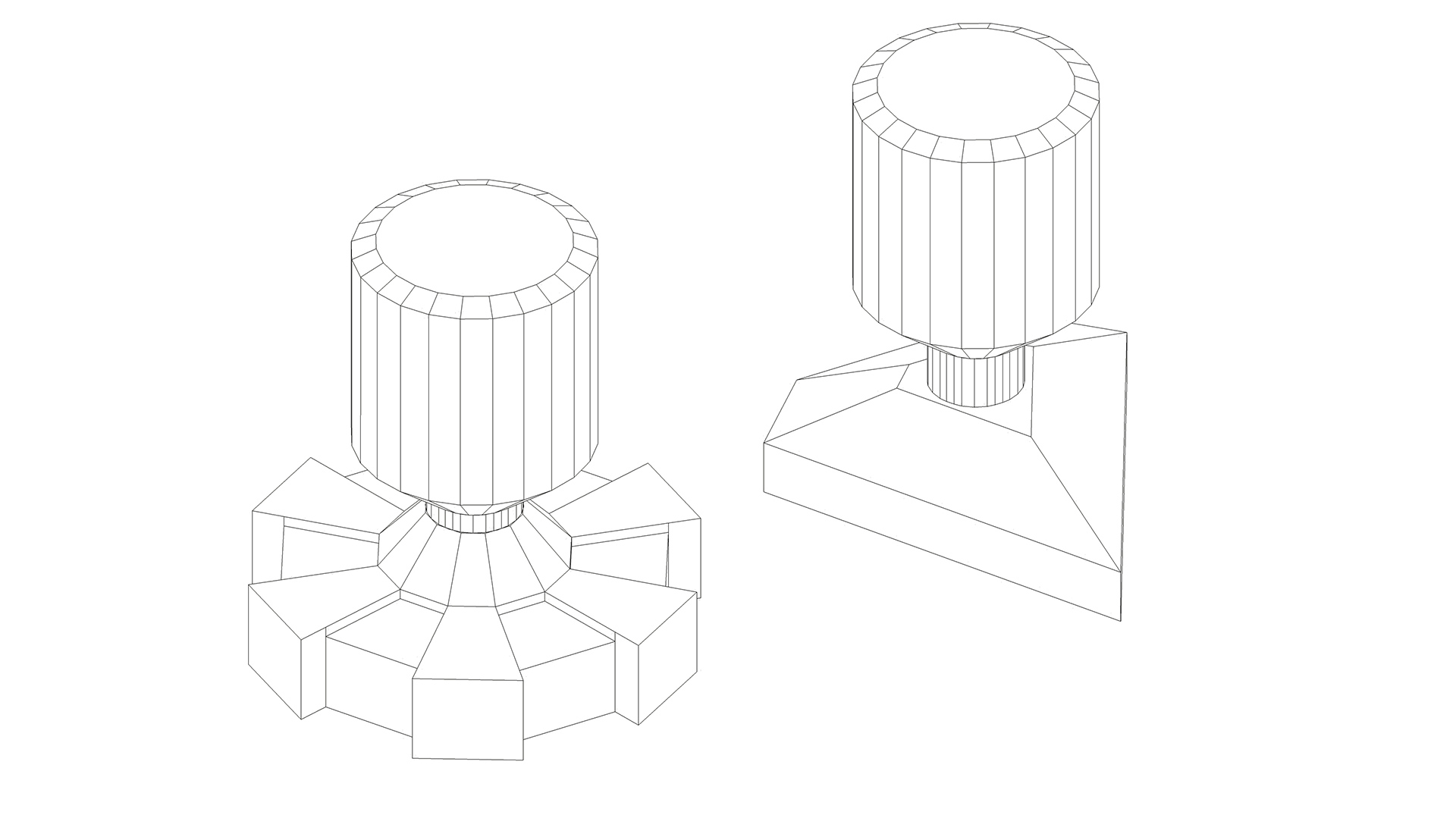
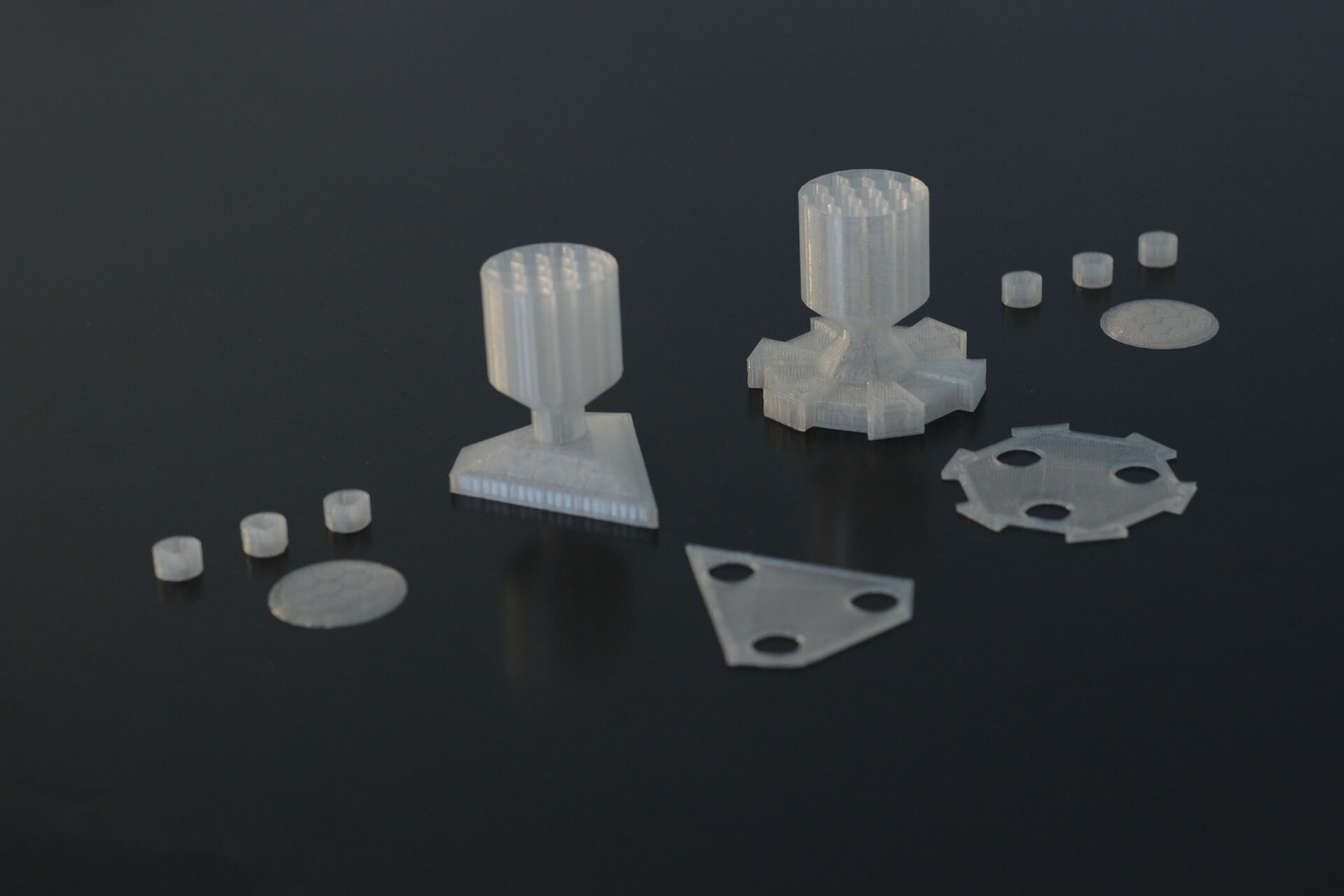
In the end I drew a minimal and clean UI, the interactive objects have been modeled and 3D printed, designed to recall their function of use and to appear appealing, and the system as a whole to be engaging.
Lastly, the design process culminated in the creation of a fully working scaled prototype, which have been tested, providing insights for a project refinements and scaled implementation.
A tablet was used for the small-scale prototype and the application was coded as an Android application. This allowed me to have a very sensitive low-cost touch screen and an accessible development environment to provide a true-to-life experience of the scale screen needed for the much more expensive project.